Guides/Buying guides·8 min read·Updated September 4, 2026
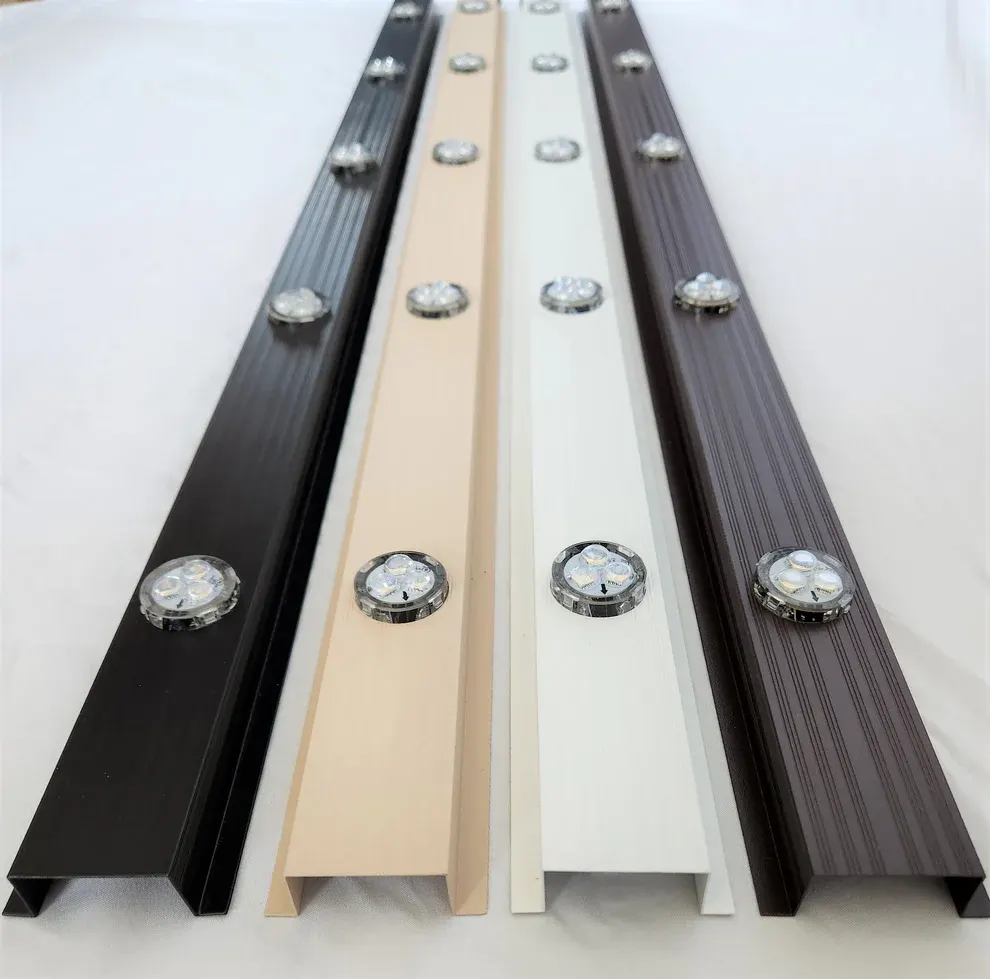
The aluminum track that carries a permanent lighting kit comes in four colours. Matching it to your fascia is the difference between a system that vanishes by day and one that draws attention for the wrong reasons.
Key takeaways
- 1Track colour only matters in daylight; after dark, the lit pucks look the same regardless of which of the four track colours is underneath them.
- 2The goal is for the track to disappear against your fascia or soffit trim, not to match your siding, shutters or roof.
- 3Black works on far more homes than people expect because it reads as a shadow line rather than a colour, even against lighter trim.
- 4Wicker and brown exist specifically for homes with wood-tone trim, cedar accents or darker vinyl where black or white would stand out.
- 5When a house has two trim colours, pick the track colour that matches the surface you are actually screwing into, usually the fascia rather than the soffit panel.
Every 12V permanent lighting kit uses the same aluminum track and the same RGBW pucks. The one visual choice you make at checkout is track colour: black, white, wicker or brown. It seems like a minor detail next to picking a kit length or planning power injection, but it is the one decision that affects how the system looks every single day the lights are off, which on most homes is more hours than the lights are on. Get it right and the track reads as a clean shadow line under the roof edge. Get it wrong and you have a visible strip of the wrong colour running the length of your house in daylight.
Why track colour is a daytime decision
It helps to separate the two jobs the track does. At night, with the pucks lit, the aluminum housing is essentially invisible; light comes from the puck lenses, not the track body, so a black track and a white track look identical after dark under any colour or brightness setting. During the day, with the lights off, the track is simply a strip of coloured aluminum sitting against your fascia or soffit, and that is when colour choice matters. The question to ask is not which colour looks best, but which colour disappears against the surface it is mounted to.
The four track colours and where each one fits
Black
Black is the most versatile option and the one we sell most often, and it works on more homes than the colour name suggests. Roofline trim throws a natural shadow line under the drip edge, and black track sits in that shadow rather than standing out from it, even on homes with white or light beige fascia. It is the obvious choice for dark fascia, dark brick, black eavestrough, or any home with black window frames or black garage doors, where it ties into an existing colour already present on the exterior.
White
White track is the right call on the classic Ontario subdivision home: white vinyl fascia, white soffit panels, white eavestrough. On these houses it mounts flush against trim of the same colour and is genuinely difficult to spot from the street in daylight. White is a poor match, though, on anything with cream, ivory or slightly warm-toned trim, since a bright white track will look subtly off against an almost-white surface in a way that is more noticeable than a clear colour mismatch would be.
Wicker
Wicker is a warm tan tone built for homes with wood-look vinyl siding, cedar shake accents, or fascia in the beige-to-tan family that neither black nor white handles well. It shows up often on homes with stone veneer accents and warm-toned brick, where the trim leans toward tan or light wood rather than true white. If your fascia looks more cream or sand than pure white, wicker is worth comparing before defaulting to white.
Brown
Brown is the match for dark wood-tone fascia, brown vinyl trim, and homes with dark brown eavestrough or window frames. It is a common pairing on homes with red or brown brick and on homes finished with a traditional brown fascia board rather than white or black vinyl. Brown and black can look similar in a product photo but read differently against actual wood-tone trim, where brown blends and black can look slightly cool by comparison.
How to actually decide: match the surface, not the house
The most reliable method is boring but effective: go outside, look specifically at the fascia board or soffit edge where the track will actually be screwed in, and compare it to the four track colour options rather than to your siding, roof shingles or front door colour. A home can have brick in one tone, siding in another, and trim in a third; the only comparison that matters for track colour is the trim surface itself, because that is what the track sits against.
- Photograph your fascia in daylight and hold the photo next to swatches of the four colours rather than judging from memory.
- If you are mounting to the fascia board (the vertical trim under the shingle edge) rather than the soffit (the horizontal panel underneath), match to the fascia specifically, since that is the visible surface from the street.
- Check the comparison in both bright midday light and the flatter light of late afternoon, since some colour mismatches only show up under direct sun.
- When genuinely stuck between two options, go with the darker of the two. A track colour that reads as a slightly darker shadow is far less noticeable than one that reads as a slightly lighter, brighter line.
Common fascia and soffit combinations we see across Ontario
A few patterns come up again and again in the homes we ship to across Southern Ontario. New-build subdivisions from the last fifteen to twenty years overwhelmingly use white vinyl fascia and soffit, which pairs cleanly with white track. Older brick homes from the 1960s through 1980s often have painted wood fascia in a darker tone, sometimes brown, sometimes a weathered near-black, both of which point toward black or brown track rather than white. Homes finished more recently with board-and-batten siding or cedar-look vinyl accents tend to run wicker or brown trim rather than plain white, since the whole design intent is a warmer, less stark look than a traditional subdivision home.
- White vinyl subdivision homes, built roughly 2005 to present: white track in the large majority of cases.
- Older brick homes with painted wood fascia: black or brown, depending on how dark the existing paint has weathered.
- Homes with cedar shake gable accents or board-and-batten trim: wicker most often, brown on darker examples.
- Homes with black window frames, black garage doors or black eavestrough as an accent: black track, even if the base fascia colour is white, since it ties into the accent colour already on the house.
What happens if you get it a bit wrong
A track colour that is close but not perfect is rarely a serious problem. Most track sits directly under the drip edge or shingle overhang, in partial shade for much of the day, which softens small colour mismatches considerably compared to how they would look in full, direct sun. It is a bigger issue on homes with very light, very glossy fascia and dark track, or the reverse, where the contrast is sharp rather than subtle. If you are between two close options, lean toward the one that blends into shadow rather than the one that stands out against bright trim.
Track colour has no effect on light output or colour accuracy
It is worth saying plainly: the track housing colour has zero effect on the RGBW puck's light output, brightness, or colour accuracy once it is lit. All four track colours use the identical puck, the identical 46-lumen output, and the identical 16-million-colour range through the WLED controller. Choosing black over white, or wicker over brown, is a purely cosmetic decision for daytime appearance and does not trade off performance in any way.
What track colour changes for install day
Colour choice has no bearing on how the track mounts or how the kit performs, but it is worth thinking about alongside your install plan rather than as a separate decision made in isolation. If you are trimming pieces at corners, as covered in our /how-it-works installation guide, cut edges on darker colours can show a thin line of raw aluminum where the anodized or painted finish is cut through; a dab of matching touch-up paint, sold at most hardware stores as furnace or appliance touch-up paint in black or brown, cleans this up in a few minutes. Lighter colours like white and wicker show this far less, since the raw aluminum edge is closer to their base tone already.
It is also worth ordering a few extra screws in a finish that disappears against your chosen track colour. The kit ships with colour-matched 5/8-inch soffit screws, but on a long run with several corners it is easy to end up a few screws short in one colour if a section needed to be re-mounted. Keeping a small stock on hand from the start avoids a mismatched screw head standing out against an otherwise clean install.
Ordering the right colour with your kit
Track colour is selected per kit at checkout, and every kit size from 50 ft up through 250 ft is available in all four colours. If you are unsure and want to see the finish in person before committing to a full-length order, our /shop page lists each kit with its colour options, and our team can talk through a specific fascia colour by phone or email before you place the order. Planning the run length and connectors alongside colour is covered in our installation guide at /how-it-works, which is worth reading before you finalize an order.
Getting the colour right the first time avoids the more expensive alternative, ordering additional track later at a different colour split, or living with a mismatch you notice every time you pull into the driveway during the day. Take the ten minutes to compare swatches against your actual fascia before ordering, and the daytime appearance of the system will match the polish of the nighttime display.
Frequently asked questions
Does track colour affect how bright or accurate the lights look at night?
No. All four track colours use the identical puck and controller, so brightness, colour range and accuracy are the same regardless of which track colour you choose. Track colour is a purely daytime, cosmetic decision.
What track colour works best for white vinyl siding and white fascia?
White track is usually the best match for white vinyl fascia and soffit, since it mounts flush against a surface of the same base colour. If your trim is cream or slightly off-white rather than pure white, compare wicker as well, since a bright white track can look mismatched against warm-toned white trim.
Can I order two track colours for one house?
Yes. If your home has more than one fascia colour, for example a white main house and a brown-trimmed addition or garage, you can split a kit order between two track colours to match each section. Plan the split into your measured run lengths before ordering.
I cannot decide between two close colours. What should I do?
Photograph your fascia in daylight and compare it against swatches of the two options rather than judging from a product photo alone. When still unsure, choose the darker of the two, since a slightly darker track blends into the natural shadow under the roofline better than a slightly lighter one stands out.
Does track colour need to match my roof shingles or siding colour?
No. Match the track to the fascia or soffit surface it is actually mounted against, not to your roof, siding, brick or front door colour. Those other exterior colours are not what the track sits next to.
Is wicker the same as brown?
No, they are distinct colours. Wicker is a warm tan tone suited to wood-look vinyl siding and lighter cedar or stone accents, while brown is a darker wood tone suited to dark brown fascia, brown vinyl trim and darker brick homes. Compare both against your specific trim if you are between the two.
Ready to build it?
Everything in this guide ships from London, Ontario.
Complete 12V kits from $1,265, plus every part sold separately. Free Canadian shipping over $500.
Keep reading
Buying guides · 9 min
Permanent Lighting Cost in Canada: DIY Kit vs Professional Install
Professional permanent lighting installs in Canada run $25 to $40 a foot. A DIY kit for the same house is roughly a third of that. Here is what the price difference actually buys.
Buying guides · 10 min
Permanent Holiday Lighting Compared: Trimlight, Jellyfish, Gemstone, Govee and DIY Kits
A category-by-category comparison of the permanent lighting options available to Canadian homeowners: professional-install brands, consumer smart strips, and DIY roofline kits, with what each actually costs and where each one fits.
Buying guides · 9 min
Permanent vs Seasonal Christmas Lights: Which Is Right for Your Home?
Seasonal strings, adhesive strip lights and permanent roofline systems all light up a house, but they cost, install and hold up differently. Here is how the three actually compare for a Canadian home.