Guides/Planning·9 min read·Updated September 4, 2026
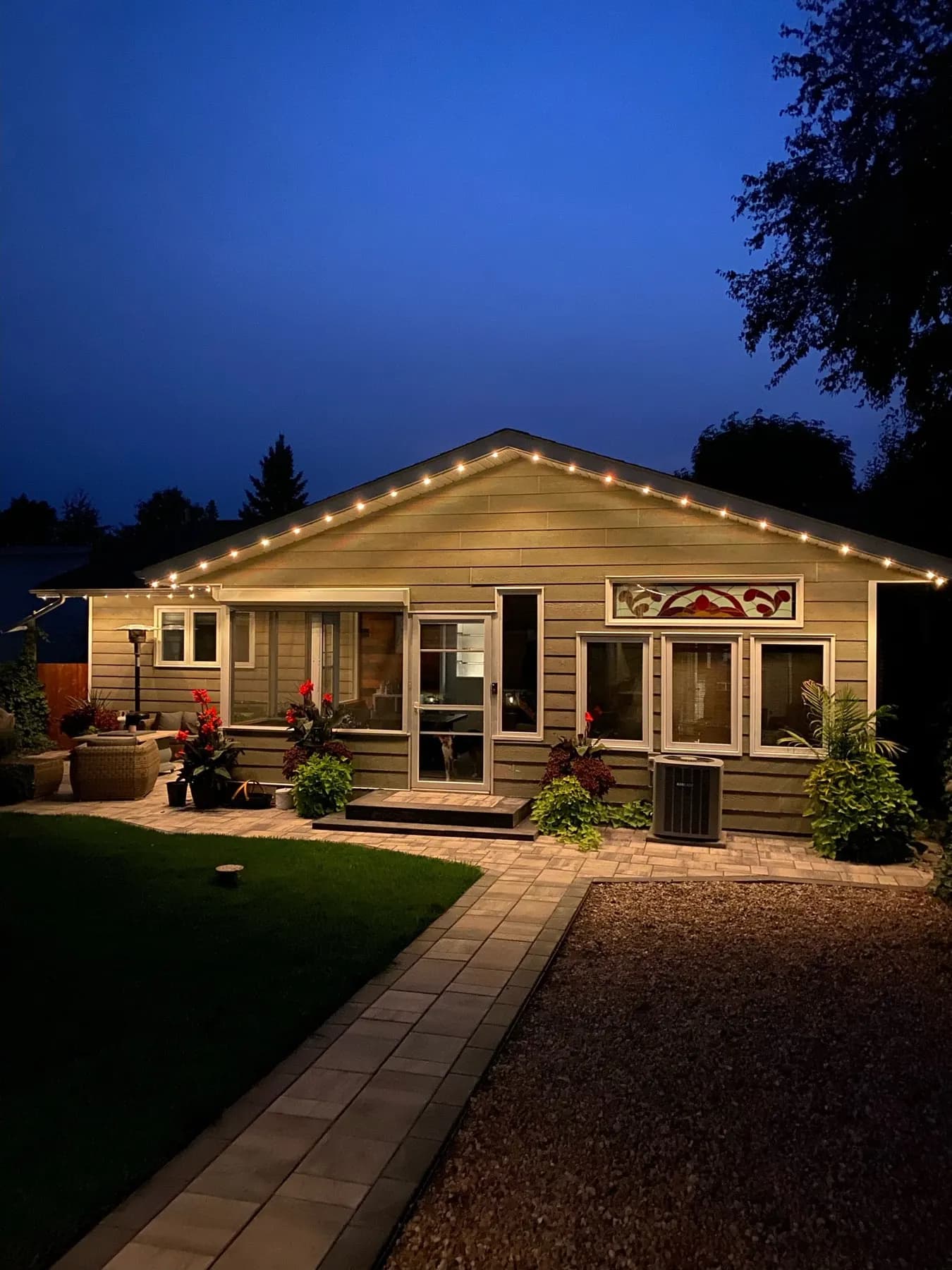
Canadian homeowners looking at permanent roofline lighting want a straight answer on cold weather. Here is what the low-voltage electronics tolerate, what snow and ice actually do to a roofline install, and where the real failure points are.
Key takeaways
- 1Quality 12V permanent lighting pucks are rated IP68 and tested to -40 C, which covers the coldest nights recorded across most of Canada.
- 2Snow and ice do not damage sealed track or pucks directly; the real risk is ice dams and heavy snow load pulling on poorly fastened track or loose connectors.
- 3LEDs actually run more efficiently in cold weather than in summer heat, so winter is not the season that shortens their life.
- 4The power supply and controller matter as much as the track itself; keep them dry and out of direct snow accumulation even though they carry an outdoor rating.
- 5A correctly installed 12V kit from Permanent Lighting Direct is designed to stay up year-round through a full Ontario winter, not just for the holiday season.
The question comes up every fall from homeowners in London, Ottawa, Winnipeg and everywhere in between: will this actually survive a real Canadian winter, or is it built for a milder climate and marketed north anyway. It is a fair question. Plenty of consumer holiday lighting is designed for a six-week seasonal hang and a trip back into a storage tote before the first big snowfall. Permanent roofline lighting is a different category of product, built to stay on the house for years, through freeze-thaw cycles, ice storms and everything a Canadian roof deals with between November and March. The honest answer requires looking at three separate things: the electronics, the physical mounting, and the weather itself.
What the cold actually does to the electronics
LED diodes are, if anything, happier in the cold than in the heat. Heat is the enemy of LED lifespan because it accelerates the breakdown of the phosphor coating and the solder joints inside the diode package. Cold slows those processes down. The bigger concern in winter is not heat damage but whether the materials around the diode, the potting compound, the plastic lens and the wire insulation, stay flexible and sealed at low temperature instead of turning brittle and cracking. This is what a cold-rating actually tests.
The puck lights used in our kits are tested to -40 C, which is the point where Celsius and Fahrenheit meet and roughly the coldest air temperature most of Canada sees even in an extreme cold snap on the Prairies. Southern Ontario, the Maritimes and coastal British Columbia rarely see anything close to that. A -40 C rating is not a marketing number picked to sound impressive; it is the threshold that separates a puck that stays sealed and flexible through an Ontario January from one that was designed for a warmer market and happens to be sold here anyway.
IP68 and what it means for melting snow
The IP68 rating on our pucks means the housing is sealed against dust and against continuous submersion, not just splashing. That matters more in winter than most people expect, because a roofline puck does not just get rained on, it sits under a snowpack, in the runoff from a melting ice dam, and in the slush that collects in a gutter above it during a January thaw. A puck rated only for splash resistance, common on cheaper strip lighting, can let moisture in during exactly those conditions and fail from corrosion months later. IP68 pucks are built to sit wet for extended periods without water reaching the electronics.
Snow load and ice: what actually breaks a roofline light
Snow and ice do not damage a sealed puck or a length of aluminum track directly. The aluminum track used in our kits is a rigid extrusion, not a flexible strip, and it does not bow or crack under the weight of accumulated snow the way a lighter product might. The failure points that actually show up on a roofline after a hard winter are almost always mechanical, not electrical, and they trace back to the install rather than the product.
- A twist connector that was only finger-tight lets meltwater in over a season of freeze and thaw, which corrodes the contacts and kills a section by the following winter.
- Track screwed into fascia that is already loose or rotting can pull away when an ice dam adds extra weight to that section of roofline.
- A power supply or controller mounted where snow can pile directly on top of it, rather than under an eave overhang, sees more moisture exposure than intended.
- Icicles that form and then fall can strike an exposed connector or a section of track mounted too far below the drip edge, though this is rare with track tucked up tight to the fascia.
Ice dams deserve their own mention
An ice dam forms when heat escaping through the attic melts snow on the upper roof, the meltwater runs down to the cold overhang and refreezes, and a ridge of ice builds up at the eave. Ice dams are a roofing and insulation issue first, and they can add real weight and standing water right where roofline lighting sits. They will not damage sealed track or pucks on their own, but a bad ice dam is worth solving for the health of the roof regardless of the lighting. If your home gets ice dams every year, that is a conversation for a roofer or insulation contractor, not a reason to avoid permanent lighting; the lighting is one of the few things on that eave actually built to handle sitting under standing meltwater.
Why permanent kits outlast seasonal string lights in winter
Traditional string lights, even good ones, are built around a light gauge wire and a plastic bulb socket meant to be strung up in November and taken down in January. Left up year-round in a Canadian climate, the wire insulation cracks from repeated freeze-thaw flexing and UV exposure, and water works into the sockets within a season or two. That is exactly why the seasonal-lighting industry tells everyone to take the lights down. A permanent system is engineered for the opposite assumption: it goes up once and the specification, sealed IP68 housings, -40 C tested materials, rigid aluminum track, low voltage 12V design under CSA Class 2 rules, is built around staying outside through every season, not just the one it was hung for.
The power supply and controller in cold weather
The 150 W power supply and WiFi controller included in every kit carry an outdoor rating and are designed to run continuously through winter, but they benefit from a bit of placement common sense. Mount them somewhere with some shelter from direct snow accumulation, under an eave overhang rather than on an open wall, and off the ground so meltwater does not pool around the base. None of this is different from how you would treat any outdoor electronics box on a Canadian house, and it is covered in the install guide included with every kit. Full details on the mounting steps for the whole system are in our guide on installing a kit yourself, linked at /diy-kits.
What about extreme cold snaps and rapid temperature swings
A cold snap that drops from a mild day to -25 C overnight, common in a Prairie or Northern Ontario winter, cycles materials through expansion and contraction faster than a gradual seasonal cooldown. This is where a genuine -40 C test rating earns its keep, because it is specifically testing the materials through that kind of thermal stress, not just confirming the lights turn on in a freezer. Products rated only to -10 C or -20 C, common on lower-cost consumer strip lighting, are more likely to show brittleness or connector failure during exactly this kind of swing, which is often when homeowners in colder provinces report a section going dark partway through winter.
Real-world track record across Canadian climates
Permanent LED roofline lighting has been installed on homes across the coldest parts of the country for several years now, from the Prairies through the Canadian Shield to Atlantic Canada's ice-storm-prone coast. The pattern that shows up is consistent: installs done with fully seated connectors and track fastened into solid fascia hold up through winter after winter, and the rare failures trace back to an installation shortcut rather than the climate beating the product. That is also why our kits carry a 5-year parts warranty, covered at /warranty, rather than a shorter seasonal guarantee; the product is built and backed for year-round Canadian use, not a single holiday run.
Regional differences worth knowing
Canada's winters are not one climate, and it helps to know which risk applies to your region. Southern Ontario and the Maritimes see more freeze-thaw cycling than deep cold, with temperatures bouncing above and below freezing repeatedly through the season; that cycling is exactly what stresses a loose connector or a poorly sealed screw hole over several winters. The Prairies and Northern Ontario see fewer freeze-thaw swings but deeper, longer cold snaps, which puts more stress on material flexibility, the scenario a -40 C test rating is built around. Coastal British Columbia deals with near-constant winter rain rather than deep cold, which puts the emphasis back on IP68 sealing and correctly seated connectors rather than on temperature tolerance at all. A kit built to the same specification across all of these conditions, rather than optimized for just one, is what actually holds up regardless of which province the house is in.
A quick pre-winter check worth doing
Before the first real cold snap each year, a five-minute walk around the roofline catches most of what would otherwise turn into a winter callback. Look at every visible connector and confirm the collar is still turned fully home; a connector can work loose slightly over a summer of thermal expansion even if it was seated correctly at install. Check that the power supply and controller are still mounted securely and that nothing has shifted enough to sit in a spot where snow will pile directly against it. Run a quick all-white test along the whole length while you are out there, since it is far easier to spot and fix a dim or dark section in October than to notice it for the first time under a foot of snow in January.
Bottom line for Canadian homeowners
A properly installed 12V permanent lighting kit, sealed to IP68 and tested to -40 C, is built for exactly the climate most of the country deals with every winter. The electronics are not the weak point; a rushed connector or a screw into rotten fascia is. Follow the install steps, keep the power supply sheltered, and a permanent roofline system will still be lighting up the house at the start of next winter and the one after that. Browse the kit sizes and pricing at /shop or see how the whole system fits together at /how-it-works.
Frequently asked questions
Can permanent LED lights be left up year-round in a Canadian climate?
Yes. Unlike seasonal string lights, permanent roofline kits are built with sealed IP68 pucks, rigid aluminum track and -40 C tested materials specifically so they can stay outside through every season without being taken down. That is the point of the product category.
Will heavy snow or an ice dam damage the track or the lights?
Sealed track and pucks are not damaged directly by snow or ice sitting on them. The risk is indirect: an ice dam adds weight and standing meltwater to the eave, which can stress track that was fastened into weak or rotting fascia. Solid fascia and fully seated connectors handle it without issue.
How cold can it get before permanent lights stop working?
Our pucks are tested to -40 C, which covers the coldest temperatures seen across nearly all of Canada, including Prairie and Northern Ontario cold snaps. Southern Ontario, the Maritimes and coastal BC rarely approach that threshold at all.
Does cold weather shorten the lifespan of the LEDs?
No. Heat is what accelerates LED wear, not cold. LEDs generally run efficiently in cold conditions. The lifespan factor to watch in winter is whether the surrounding materials, seals and connectors stay flexible and watertight, which is exactly what an IP68 and -40 C rating is built to confirm.
Where should the power supply and controller be mounted for winter?
Somewhere with some shelter from direct snow accumulation, such as under an eave overhang, and off the ground so meltwater does not collect around the base. Both units carry an outdoor rating and are designed to run through winter, but sensible placement avoids unnecessary moisture exposure.
Why do some string lights fail after one winter but permanent kits do not?
Seasonal string lights use lighter wire and plastic sockets meant to be stored indoors most of the year; left outside, freeze-thaw flexing and UV exposure crack the insulation within a season or two. Permanent kits use sealed connectors, rigid aluminum track and cold-rated materials specifically engineered to stay outdoors indefinitely.
Ready to build it?
Everything in this guide ships from London, Ontario.
Complete 12V kits from $1,265, plus every part sold separately. Free Canadian shipping over $500.
Keep reading
Planning · 9 min
How to Measure Your Roofline for Permanent Lighting
A wrong measurement is the most common reason a DIY permanent lighting order comes up short. Here is how to measure every roofline shape correctly the first time.
Buying guides · 9 min
Permanent Lighting Cost in Canada: DIY Kit vs Professional Install
Professional permanent lighting installs in Canada run $25 to $40 a foot. A DIY kit for the same house is roughly a third of that. Here is what the price difference actually buys.
Buying guides · 10 min
Permanent Holiday Lighting Compared: Trimlight, Jellyfish, Gemstone, Govee and DIY Kits
A category-by-category comparison of the permanent lighting options available to Canadian homeowners: professional-install brands, consumer smart strips, and DIY roofline kits, with what each actually costs and where each one fits.